
Draupadi Vastraharan
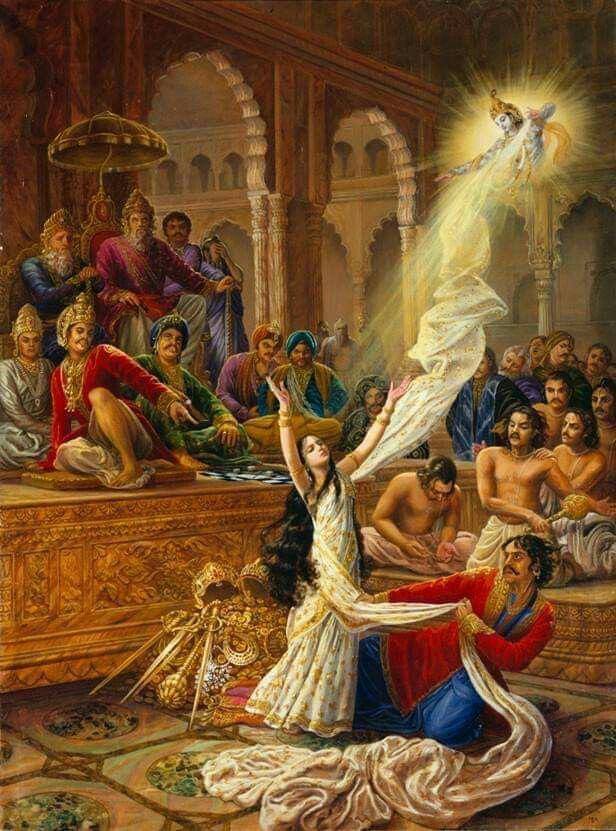
తెలుగు వెర్షన్
ద్రౌపది వస్త్రహరణం (వస్త్ర విచ్ఛేదనం) అనేది హిందూ ఇతిహాసం మహాభారతంలో ఒక కీలకమైన సంఘటన, ఇది ఆ మహా యుద్ధానికి దారితీసింది. ద్రౌపదితన గౌరవాన్ని అద్భుతంగా కాపాడుకునే శ్రీకృష్ణుడికిపూర్తిగా లొంగిపోవడం ( శరణాగతి )తో ఇది ముగుస్తుంది.
సంఘటన:
హస్తినాపూర్ అసెంబ్లీ హాలులో పాచికల ఆట (ద్యుత) సమయంలో, పెద్ద పాండవుడు యుధిష్ఠిరుడు తన సంపదను, తన రాజ్యాన్ని, తన సోదరులను, చివరకు తనను తాను కోల్పోతాడు. అప్పుడు కౌరవులు అతనిని వారి ఉమ్మడి భార్య ద్రౌపదిని పందెం వేయమని ప్రోత్సహిస్తారు, దానిని యుధిష్ఠిరుడు కూడా ఓడిపోతాడు.
కోపంతో, దుర్యోధనుడు తన సోదరుడు దుశ్శాసనుడిని ద్రౌపదిని దర్బార్ కు తీసుకువచ్చి, ఆమెను ఇప్పుడు బానిసగా పరిగణిస్తున్నందున ఆమెకు వస్త్రాపహరణం చేయమని ఆదేశిస్తాడు. ఆ సమయంలో ఋతు చక్రం కారణంగా పాక్షికంగా బట్టలు విప్పి (ఒకే వస్త్రం ధరించి) ఉన్న ద్రౌపదిని జుట్టు పట్టుకుని ఆస్థానంలోకి లాక్కెళ్లి, అక్కడ ఆమె సభ యొక్క ధర్మ భావాన్ని (కర్తవ్యం/ధర్మం) విజ్ఞప్తి చేస్తుంది.
ఆమె వాదనలు శక్తివంతమైనవి. యుధిష్ఠిర చర్యల చెల్లుబాటును ప్రశ్నించాయి (అప్పటికే తనను తాను కోల్పోయిన వ్యక్తి తన భార్యను పందెం వేయగలడా). అయితే, కురు రాజవంశంలోని ప్రముఖ పురుష సభ్యులు, ఇతర రాజులు – తాత భీష్ముడు, ద్రోణాచార్యుడు తో సహా ఆమె స్వంత భర్తలు (వ్యతిరేకతను వ్యక్తం చేసిన ఏకైక కౌరవుడు వికర్ణుడు తప్ప) – ఆ కాలపు కఠినమైన సామాజిక నియమాలకు లేదా దుర్యోధనుడి భయంతో కట్టుబడి మౌనంగా ఉన్నారు. కర్ణుడు ఆమెను మరింత అవమానించాడు, ఐదుగురు భర్తలను కలిగి ఉండటం మరియు ఆమె వస్త్రాపహరణ ఆదేశాన్ని సమర్థించడం కోసం ఆమెను “వేశ్య” అని పిలిచాడు.
ద్రౌపది లొంగిపోవడం (శరణాగతి):
మొదట్లో, ద్రౌపది తన సొంత బలం మరియు వాదనలపై ఆధారపడి, దుశ్శాసనుడు తన వస్త్రాపహరణ ప్రయత్నాలను శారీరకంగా ప్రతిఘటించడానికి ప్రయత్నించింది. మానవ ప్రయత్నాలు మరియు న్యాయం కోసం చేసిన అన్ని విజ్ఞప్తులు విఫలమైనప్పుడు, ఆమె పూర్తిగా నిస్సహాయంగా మరియు ఒంటరిగా ఉన్నట్లు గ్రహించినప్పుడు, ఆమె ప్రతిఘటించడం మానేసి, శ్రీకృష్ణుడికి పూర్తిగా లొంగిపోయి తన చేతులను పైకెత్తింది.
ఆమె శరణాగతి అనేది హిందూ మతంలో ఒక ముఖ్యమైన భావన అయిన శరణాగతికి ఒక ప్రధాన ఉదాహరణ , ఇందులో పూర్తి భక్తి మరియు రక్షణ కోసం దైవంపై ఆధారపడటం ఉంటాయి. ఇది ఐదు ముందస్తు అవసరాల ద్వారా వర్గీకరించబడుతుంది
అనుకుల్య సంకల్పం: భగవంతునికి నచ్చినది చేయడం.
ప్రతికుల్య వర్జన: ఆయనకు అసంతృప్తి కలిగించే చర్యలను నివారించడం.
మహావిశ్వాసం: ఆయన రక్షిస్తాడనే అచంచలమైన విశ్వాసం కలిగి ఉండటం.
గోప్తృత్వ వరణ: రక్షకుడిగా ఆయనను సహాయం కోసం స్పష్టంగా అడగడం.
కార్పణ్య: ఒకరి పూర్తి నిస్సహాయతను అంగీకరించడం.
ఆ నిస్సహాయ క్షణంలో, ద్రౌపది ఈ ప్రమాణాలన్నింటినీ నెరవేర్చింది. దైవిక సమాధానం ఒక అద్భుతంలా వచ్చింది: దుశ్శాసనుడు ఆమె చీరను లాగగానే, శ్రీకృష్ణుడు ఆమె గౌరవానికి భంగం కలగకుండా అడ్డుకుని అంతులేని వస్త్రాన్ని అందించాడు. చివరికి, దుశ్శాసనుడు అలసటతో కుప్పకూలిపోయాడు మరియు ప్రయత్నం విఫలమైంది.
ఈ సంఘటన వంద మంది కౌరవ సోదరులను చంపడానికి భీముడు చేసిన ప్రతిజ్ఞను దృఢపరిచింది మరియు చివరికి కురుక్షేత్ర యుద్ధానికి తక్షణ కారణం అయ్యింది.

English Version
The Draupadi Vastraharan (disrobing) is a pivotal event in the Hindu epic the Mahabharata that led to the great war. It culminates in Draupadi’s complete surrender (sharanagati) to Lord Krishna, who miraculously protects her honor.
The Incident
During a rigged game of dice (Dyuta) in the assembly hall of Hastinapur, the eldest Pandava, Yudhishthira, loses all his wealth, his kingdom, his brothers, and finally, himself. The Kauravas then encourage him to bet Draupadi, their common wife, which Yudhishthira also loses.
Enraged, Duryodhana orders his brother Dushasana to bring Draupadi to the assembly hall and disrobe her as she is now considered a slave. Draupadi, who was at the time in a state of partial undress (wearing one cloth) due to her menstrual cycle, is dragged by the hair into the court, where she appeals to the assembly’s sense of dharma (duty/righteousness).
Her arguments were powerful and questioned the validity of Yudhishthira’s actions (whether a man who had already lost himself could bet his wife). However, the prominent male members of the Kuru dynasty and other assembled kings—including grandsire Bhishma, Dronacharya, and even her own husbands (except for Vikarna, the only Kaurava who voiced opposition)—remained silent, bound by the rigid social codes of the time or the fear of Duryodhana. Karna further insulted her, calling her a “prostitute” for having five husbands and supporting the order for her disrobement.
Draupadi’s Surrender (Sharanagati)
Initially, Draupadi tried to physically resist Dushasana’s attempts to disrobe her, relying on her own strength and arguments. When all human efforts and appeals to justice failed, and she found herself completely helpless and alone, she stopped resisting and raised her hands in complete surrender to Lord Krishna.
Her surrender is a prime example of sharanagati, a key concept in Hinduism that involves total devotion and reliance on the divine for protection.
It is characterized by five prerequisites:
Anukulya Sankalpa: Doing what pleases the Lord.
Pratikulya Varjana: Avoiding actions that displease Him.
Mahavishvasa: Possessing unwavering faith that He will save one.
Goptrtva Varana: Explicitly asking Him for help as a protector.
Karpanya: Acknowledging one’s utter helplessness.
In that moment of total helplessness, Draupadi fulfilled all these criteria. The divine answer came as a miracle: as Dushasana pulled at her sari, Lord Krishna provided an endless supply of cloth, preventing her honor from being violated. Eventually, Dushasana collapsed in exhaustion, and the attempt was foiled.
This incident solidified Bhima’s oath to kill all the hundred Kaurava brothers and ultimately became the immediate cause of the Kurukshetra War.