
Kalinga Narthana
తెలుగు వెర్షన్
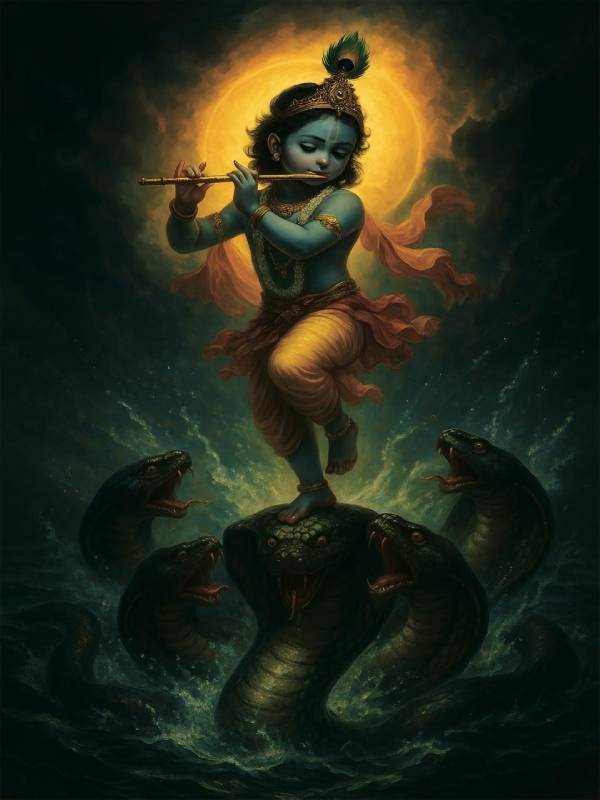
ఈ చిత్రం హిందూ దేవత శ్రీకృష్ణుడిని కళింగ నర్తన రూపంలో వర్ణిస్తుంది, అక్కడ అతను బహుళ పడగలు కలిగిన సర్పం కాళియ తలపై నృత్యం చేస్తాడు. ఈ క్షణం హిందూ పురాణాలలో ఒక ముఖ్యమైన కథ, చెడుపై మంచి విజయాన్ని సూచిస్తుంది.
శ్రీకృష్ణుడు హిందూ మతంలో అత్యంత గౌరవనీయమైన దేవతలలో ఒకడు మరియు విష్ణువు యొక్క ఎనిమిదవ అవతారంగా పరిగణించబడుతుంది.
ఈ దృశ్యం యువ కృష్ణుడు యమునా నదిని విషపూరితం చేసిన విష సర్పమైన కాళియాను అణచివేసిన పురాణాన్ని వివరిస్తుంది. దాని తలలపై నృత్యం చేయడం ద్వారా, కృష్ణుడు ఆ పామును లొంగిపోయి నదిని విడిచిపెట్టేలా చేశాడు, బృందావనంలోని ప్రజలకు మరియు పశువులకు జలాలు మళ్ళీ సురక్షితంగా ఉండేలా చేశాడు.
కృష్ణుడిని తరచుగా నీలిరంగు చర్మంతో, వేణువును పట్టుకుని చిత్రీకరిస్తారు, ఇది అతని దివ్య ఆకర్షణకు మరియు తన సంగీతంతో ప్రజలను ఆకర్షించే సామర్థ్యానికి చిహ్నం

English Version
The image depicts the Hindu deity Lord Krishna in the form of the Kalinga Narthana, where he dances on the head of the multi-hooded serpent, Kaliya. This moment is a significant story in Hindu mythology, symbolizing the triumph of good over evil.
Lord Krishna is one of the most revered deities in Hinduism and is considered the eighth avatar of Lord Vishnu.
The scene illustrates the legend where the young Krishna subdued the venomous serpent Kaliya, who had poisoned the Yamuna river. By dancing on its heads, Krishna forced the serpent to surrender and leave the river, making the waters safe again for the people and cattle of Vrindavan.
Krishna is often portrayed with blue skin, holding a flute, which is a symbol of his divine charm and ability to lure people with his music.